

Hyaluronic acid is a humectant: an ingredient that draws water towards itself and holds it there. On skin, that means a fresher, smoother, more comfortable feel and a softer, plumper look, without weight or shine. It works best as a serum on slightly damp skin, sealed in with moisturiser, with sunscreen on top by day. It suits almost every skin type, and it sits happily alongside most other ingredients in a routine.
What Is Hyaluronic Acid?
Hyaluronic acid is a substance your skin already makes. It sits between the cells of the skin, where its job is to bind water and keep the surface supple. In skincare it is produced in the laboratory and added to serums, creams and masks for the same reason: it attracts moisture and helps skin hold on to it.
That is all it does, and it does it well. Hyaluronic acid is not an exfoliant, and it does not change how skin behaves over time. Think of it as a glass of water for the surface. Skin that feels tight after cleansing, or looks dull at the end of a long day, is usually the skin that notices it most.
Sodium Hyaluronate and Molecular Weight, Explained Simply
Turn over a pack and you will rarely see "hyaluronic acid" on its own. Sodium hyaluronate is the salt form of hyaluronic acid, and the one you will meet most often, because it is stable and blends easily into a formula. Hydrolysed hyaluronic acid has been broken into smaller pieces. Some packs also speak of "hyaluronic derivatives" or a "complex", which simply means more than one form in the same formula.
Molecular weight is the size of each molecule. Larger molecules stay on the surface, where they form a light, moisture-holding film you can feel straight away. Smaller ones, described as low molecular weight, are designed to settle into the uppermost layers of skin. Many formulas combine sizes, so that skin feels hydrated both on the surface and a little below it. You do not need to choose a number: a formula that names more than one form is usually doing this for you.
Hyaluronic Acid Serum: The Simplest Way to Use It
A serum is the most direct way to wear hyaluronic acid. It is light and watery, so it layers under anything, and a few drops cover the whole face. We have chosen four that show the range. Isdin's Hyaluronic Booster Serum comes in single-dose ampoules and combines two molecular weights, with both hydrolysed hyaluronic acid and sodium hyaluronate. Avène's Hydrance Boost Concentrated Hydrating Serum pairs hyaluronic acid with niacinamide in a light gel suited to sensitive skin. Lierac's Hydragenist The Rehydrating Serum is made to sit just before your cream. Laboratoires Filorga's Hydra-AOX [5] Face Serum brings hyaluronic derivatives together with niacinamide and an antioxidant complex, and layers easily beneath moisturiser or SPF.
- Hyaluronic Booster Serum
- Hydrance Boost Concentrated Hydrating Serum
- Hydragenist The Rehydrating Serum
- Hydra-AOX [5] Face Serum
Where Does It Sit in Your Routine?
Hyaluronic acid works with the water around it, so the order matters more than the amount.
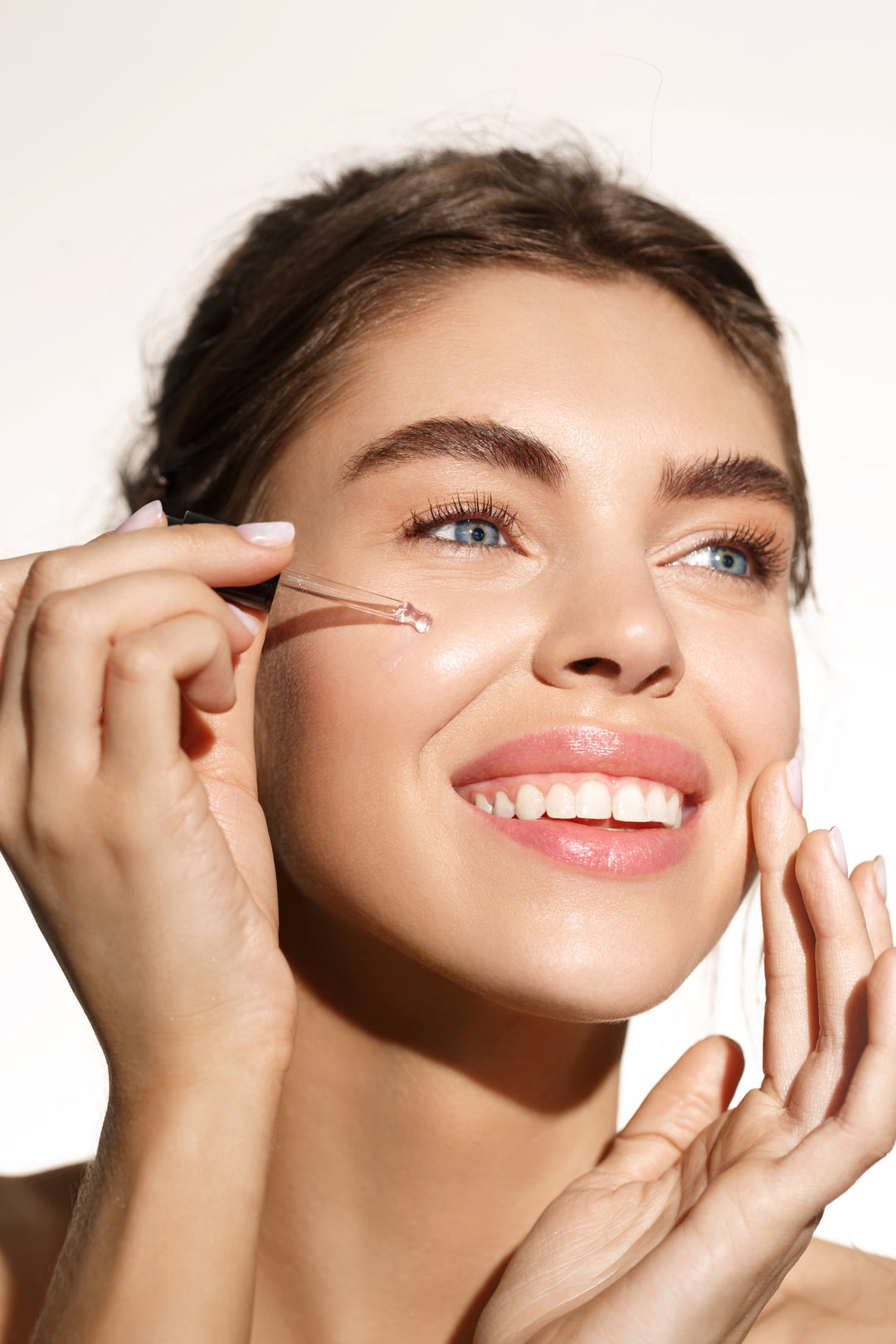
Cleanse, then leave your face slightly damp, or mist it lightly. Press two or three drops of serum into the skin rather than rubbing. Follow straight away with moisturiser, which seals the water in and keeps it on your skin rather than letting it drift into the air. In the morning, finish with sunscreen. Hyaluronic acid does not make skin more sensitive to the sun, but daily SPF belongs at the end of every morning routine. You can use it morning and evening.
If your skin ever feels tighter after a hyaluronic serum, particularly in dry or heated rooms, it usually needs a richer moisturiser on top rather than less serum.
Serum, Cream or Mask?
A serum gives the most hydration for the least texture. A cream with hyaluronic acid does two jobs in one step: it hydrates and, through its oils and butters, seals that moisture in. A mask is an occasional, concentrated moment, for a morning when skin looks tired or an evening after travel.
If you prefer a single step, a cream is the natural choice. Clarins's Hydra-Essentiel [HA2] Crème Désaltérante is a silky cream with a hyaluronic derivative, made for normal to dry skin. Lierac's Hydragenist The Rehydrating Radiance Cream pairs hyaluronic acid with a light, non-greasy texture. Biovène's Hyaluronic Day Glow Hydrating Cream combines hyaluronic acid, niacinamide and aloe, and layers comfortably under sunscreen or make-up.
- Hydra-Essentiel [HA2] Crème Désaltérante Face Moisturiser
- Hydragenist The Rehydrating Radiance Cream
- Hyaluronic Day Glow Hydrating Cream
Masks are worth keeping for the days your skin asks for more. Barulab's Hyaluron Hydrating Gel Mask is built around low-molecular-weight sodium hyaluronate with glycerin. Iroha's Avocado & Hyaluronic Sheet Mask pairs avocado extract with sodium hyaluronate on a soft cotton-eucalyptus sheet. Glam of Sweden's Cactus & Hyaluronic Smoothing Mask adds cactus extract, niacinamide and panthenol. Apply to clean skin, leave on for the time given on the pack, then press any remaining essence in and follow with moisturiser.
Who Is Hyaluronic Acid For?
Very nearly everyone. Dry skin appreciates the comfort. Oily and combination skin often benefits too, because skin that is short of water can feel tight even when it looks shiny, and a light serum hydrates without adding oil. Sensitive skin generally tolerates it well, as it is one of the gentler ingredients in skincare. It is also a sensible first step if you are building a routine and want something simple and forgiving.
As with any new product, try it on a small area first if your skin reacts easily, and read the full ingredient list for anything you know you avoid.
What Pairs Well With Hyaluronic Acid?
Hyaluronic acid is a good companion because it asks nothing of the ingredients around it.
Niacinamide is its most common partner, and you will find the two together in several of the formulas above: niacinamide is used for a more even-looking tone, while hyaluronic acid adds hydration. Vitamin C and other antioxidants pair well in the morning, beneath sunscreen. Retinol is easier to live with when skin is well hydrated. Use it in the evening, start slowly, wear sunscreen by day, and ask your pharmacist or doctor before using it if you are pregnant or breastfeeding. Exfoliating acids, such as glycolic or salicylic acid, can leave skin feeling dry, and hyaluronic acid helps it feel comfortable again. Patch test acids first and be consistent with SPF, as they can make skin more sensitive to the sun. Ceramides, squalane and richer creams complete the picture by holding in the moisture hyaluronic acid has drawn to the surface.
Your Next Step
If you add one product, make it a hyaluronic serum, pressed into damp skin each morning before your moisturiser and sunscreen. Give it a fortnight, and notice how your skin feels at the end of the day.



Lämna en kommentar